Helping Your Baby Sleep During the First 12 Weeks: Realistic Expectations for New Parents

One of the biggest things I tell new parents is this:
Newborn sleep is hard.
And honestly, I think most parents already know that before the baby even arrives because that is one of the main things people tell expecting parents:
“Get your sleep now.”
Because yes, newborns typically do not sleep well during those first few months, and developmentally, that is completely normal.
As a postpartum professional and newborn sleep specialist, one of the biggest things I try to help families understand is that the first 12 weeks are not about creating a perfect sleeper.
They are about:
survival
adjustment
connection
regulation
feeding
recovery
and learning your baby
And honestly?
Those first three months are kind of all a blur.
You are trying to figure out how to keep this tiny human alive, and this tiny human is also trying to figure out:
“What just happened?”
“How did I get here?”
“Why am I no longer in the womb?”
That transition is huge for both babies and parents.
What’s Actually Normal for Newborn Sleep? (0–12 Weeks)
One of the biggest misunderstandings about newborn sleep is the expectation that babies should sleep long stretches independently very early.
Most newborns will:
wake frequently overnight
need support falling asleep
contact nap
have inconsistent naps
struggle with day/night confusion
and need to eat every 2–3 hours
That is all normal.
Honestly, newborn naps are often wonky.
Some naps may last 15 minutes.
Some may last 2 hours.
Some babies only nap while being held.
Some only nap in the car.
Some only nap while babywearing.
I cannot tell you how many postpartum families tell me:
“My baby will only sleep if I hold them.”
And honestly?
That is extremely normal during the newborn stage.
Babies just spent months in a warm, tight, constantly moving environment. Wanting closeness, warmth, and contact is biologically normal.
Contact Naps Are Real
Contact naps get a lot of parents through the newborn stage.
And honestly, sometimes you just have to do what you need to do to get your baby some sleep and get yourself some rest too.
That does not mean you are creating irreversible “bad habits.”
I actually shy away from the phrase “bad habits” during the newborn stage because almost anything created during this stage can be adjusted later as babies grow developmentally.
If you need to:
feed to sleep
rock to sleep
contact nap
babywear
bounce on a yoga ball
go for stroller walks
…that is okay.
Newborn sleep support is very different from sleep training.
Wake Windows Matter A LOT
If there is one thing I wish more parents understood during the newborn stage, it would probably be wake windows.
Wake windows are essentially how long your baby can comfortably stay awake before becoming overtired.
And honestly?
Wake windows will never leave your side.
They matter for newborns, infants, toddlers, and honestly throughout early childhood.
During the first 12 weeks, most babies can only tolerate very short periods of awake time before becoming overtired.
Typical wake windows are often around:
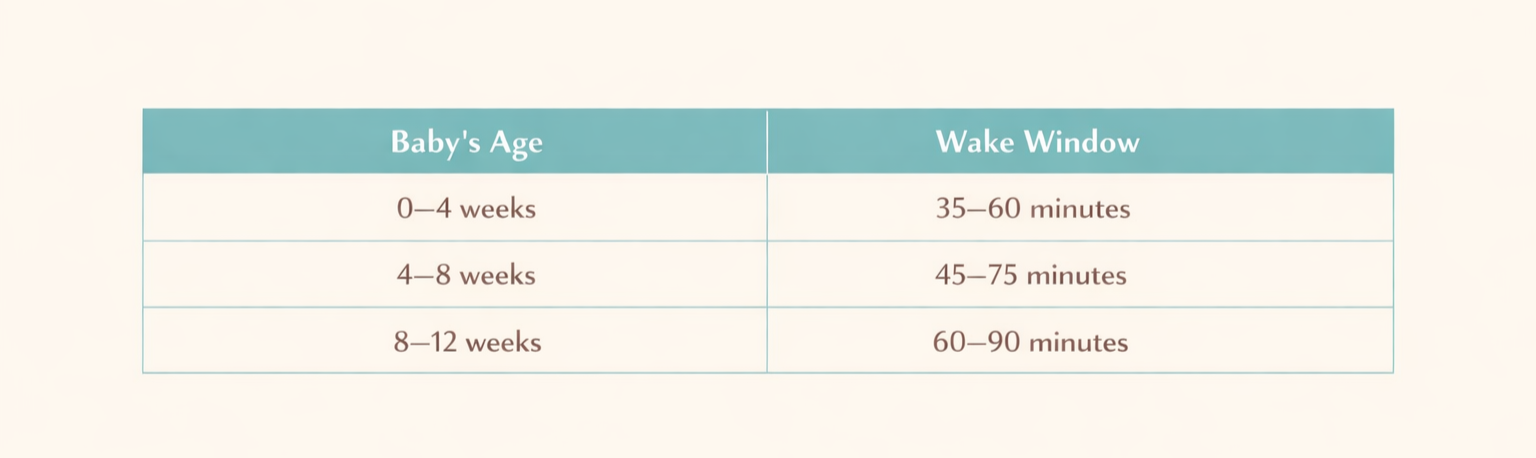
Typical Newborn Wake Windows
A quick-reference chart showing age-based wake windows to help parents recognize when it’s time to soothe the baby to sleep.
And honestly, even those longer wake windows can sometimes be pushing it for certain babies.
One of the biggest mistakes parents accidentally make is thinking:
“If I keep my baby awake longer, they’ll sleep better.”
Usually, the opposite happens.
Overtired babies often sleep worse, not better.
If you miss that “sweet spot” where your baby is showing sleepy cues, it can suddenly become much harder to help them fall asleep.
Sometimes parents and babies end up just staring at each other wondering:
“Why won’t you sleep?”
Meanwhile, the baby is actually overtired.
What Actually Helps Newborns Sleep?
Not perfect sleep.
Not sleeping through the night.
But what realistically helps?
Swaddling
Swaddling, swaddling, swaddling.
I honestly cannot emphasize swaddling enough during the newborn phase.
Babies just came from a very tight environment, and swaddling often helps them feel secure while also reducing the Moro reflex, also called the startle reflex, which can wake babies frequently during sleep.
I often hear parents say:
“My baby hates the swaddle.”
Honestly, most babies simply need time to adjust to it consistently.
Dark Nights, Bright Days
One of the best ways to support newborn sleep is helping babies begin learning the difference between daytime and nighttime.
During the day:
keep lights on
open curtains
allow normal household noise
go outside
talk to your baby
vacuum if you need to vacuum
wash dishes if you need to wash dishes
Do not feel like the entire house needs to be silent every time the baby sleeps.
During the night:
keep things dark
keep interactions calm
minimize stimulation
use low lighting if needed
keep talking to a minimum when possible
Talking, bright lights, and stimulation can wake babies up more fully overnight.
Feeding Frequently During the Day
Newborns need a lot of calories.
Making sure babies are feeding frequently throughout the day can help support longer stretches of sleep overnight because they are less likely to need to “catch up” on calories during nighttime hours.
I typically encourage responsive feeding, meaning feeding babies based on hunger cues, while also ensuring babies are not going excessively long without feeds during the day.
Babywearing
Babywearing can be incredibly helpful during the newborn stage.
It allows babies to:
feel close
feel secure
hear movement
experience warmth
and often sleep more peacefully
And honestly, it can also help parents function with both hands free while still supporting contact sleep safely.
Sound Machines
White noise and sound machines can also be very helpful because they mimic the constant sound environment babies experienced in the womb.
Many babies sleep more calmly and consistently with white noise in the background.
Eat, Play, Sleep
During the newborn stage, routines should stay very loose and flexible.
But one simple rhythm I often encourage families to think about is:
Eat, Play, Sleep.
That may look like:
baby wakes up
baby eats
short awake period
tummy time
contrast cards
cuddles
diaper change
then back to sleep
And honestly, newborn “play” is very simple.
They are little potatoes at this stage, but they still benefit from stimulation.
They benefit from:
tummy time
sensory stimulation
looking at faces
black-and-white contrast cards
hearing your voice
going outside
Safe Sleep Matters
Safe sleep is extremely important during the newborn stage.
The ABCs of safe sleep are:
Alone
Back
Crib
Meaning babies should sleep:
alone in their sleep space
on their back
on a firm, flat sleep surface free of loose blankets, pillows, stuffed animals, or additional bedding
If families choose to bedshare, it is important to understand safe sleep practices such as the Safe Sleep 7 and discuss sleep arrangements with their pediatric provider.
The goal is always keeping babies as safe as possible while supporting rest for the entire family.
What New Parents Actually Need to Hear
I think new parents need to hear that this phase is hard.
And that it is okay that it feels hard.
You will probably be in survival mode for a while.
And honestly?
That is normal.
People love to say:
“Sleep when the baby sleeps.”
But realistically, that is not always easy.
Sometimes babies only nap for short stretches.
Sometimes parents cannot sleep during contact naps safely.
Sometimes there are dishes, laundry, pumping, recovery, meals, or simply adrenaline keeping parents awake.
This is why support systems matter so much.
Use your support system.
Ask for help.
Hand the baby over sometimes.
Partners, grandparents, aunties, uncles, cousins, friends, postpartum doulas, night nannies, mom groups, Facebook groups — use your resources.
It is so important to ask for help.
I always joke with families that one of the main reasons I love my job is because I can give the baby back.
If I do an overnight shift, I can support the family all night, and then in the morning, I hand the baby back to the parents and go home.
And honestly, I can only imagine how difficult it is to then continue caring for that baby all day afterward.
Newborn care is intense.
That’s why taking shifts overnight can sometimes be incredibly helpful.
Many families split the night into shifts so that each parent gets at least one longer stretch of sleep.
And honestly?
Sleep matters.
Research consistently shows that sleep deprivation and lack of support during the postpartum period can increase the risk of postpartum anxiety, depression, emotional overwhelm, and mental health challenges. Learn more about postpartum mental health and sleep deprivation here.
Please Don’t Compare Your Baby
Every baby is different.
Some babies naturally sleep longer stretches earlier.
Some wake every two hours for months.
Both can be normal.
Social media can sometimes make parents feel like every other baby is sleeping perfectly, following strict schedules, or taking perfect naps in their bassinet.
That is not reality for many families.
Messy routines are normal during the newborn phase.
You are not going to have a perfectly scheduled day with a newborn.
That is okay.
You Are Doing Enough
This is probably one of the most important things I want new parents to hear:
You are doing enough.
If you are:
feeding your baby
changing diapers
loving your baby
trying your best
eating when you can
showering when you can
getting outside occasionally
surviving the day
…you are doing enough.
Even if the house is messy.
Even if you are exhausted.
Even if your baby only contact naps.
Even if you feel like you have no idea what you are doing.
Having a newborn is intense.
It is real. It is exhausting.
And you do not have to do it perfectly.
Looking for More Support During the Newborn Stage?
Whether you are preparing for your baby’s arrival or currently navigating those first few weeks postpartum, you do not have to figure it all out alone.
Our support services for new and expecting families include both hands-on postpartum support and realistic newborn education designed to help families feel more confident, prepared, and rested during the transition into parenthood.
Newborn Basics Workshop
Our Newborn Basics Workshop covers:
realistic newborn sleep expectations
feeding basics
soothing techniques
diapering and daily care
wake windows and routines
postpartum adjustment
and what to realistically expect during those first few weeks at home
Learn more about our workshop here:
Newborn Basics (0-3 Months)
Postpartum Doula Support
Our postpartum doula services provide emotional, educational, and hands-on support during the newborn stage, including:
overnight newborn support
newborn care guidance
feeding support
emotional support during postpartum recovery
and helping families get more rest during those exhausting first few weeks
Learn more about postpartum doula services here:
Postpartum Doula Support