When Can You Start Sleep Training? A Realistic Guide for Tired Parents
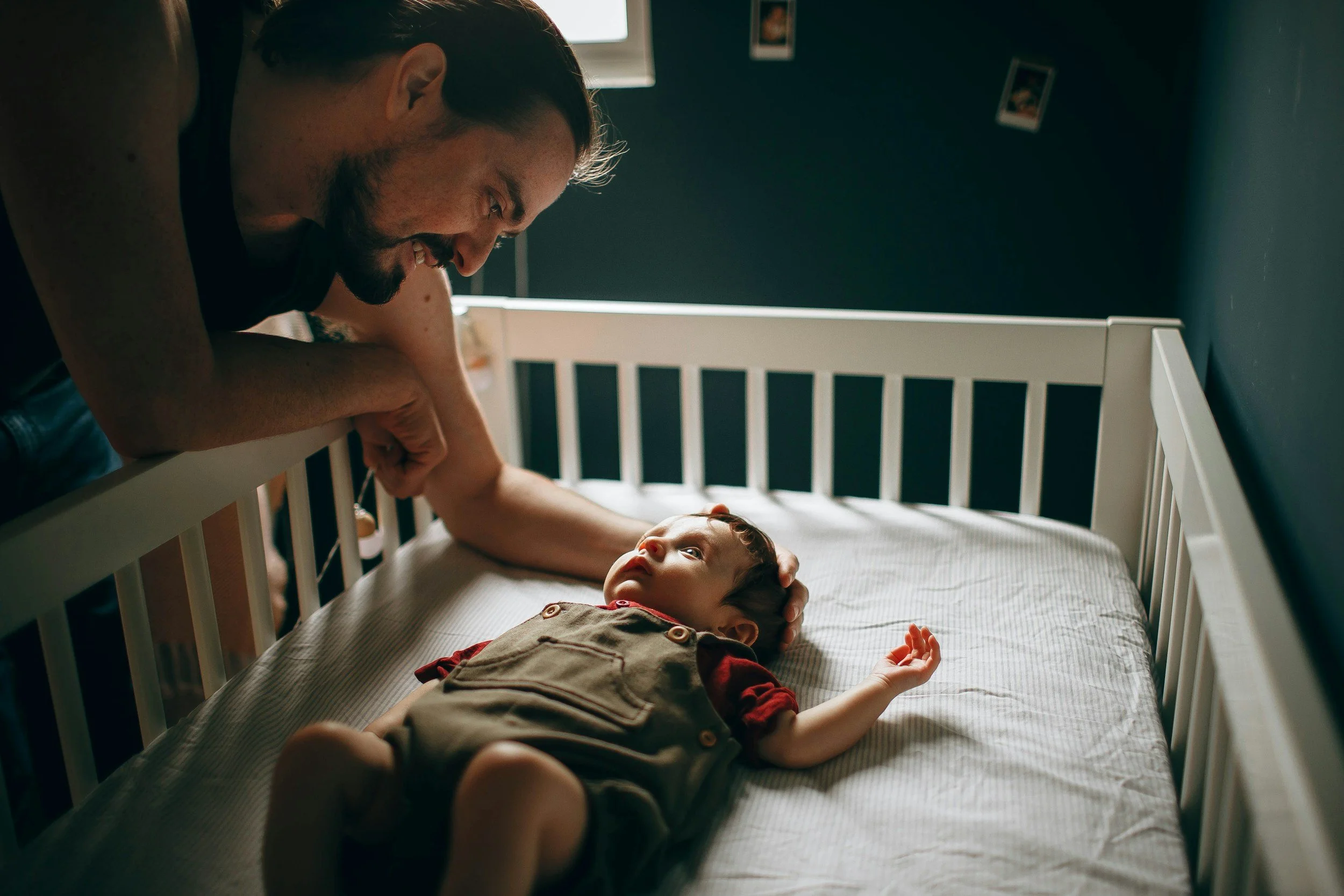
Connection Doesn’t Disappear — It Deepens
Even with sleep training in place, there’s still space for connection. The difference? Everyone in the family gets more rest.
One of the most common questions new parents ask is:
“When can we start sleep training?”
And honestly, this question usually comes from a place of complete exhaustion.
Parents are often asking this question at 2 a.m. while pacing the hallway, bouncing on a yoga ball, feeding a baby for the third time overnight, or wondering why everyone else online seems to have a baby who magically sleeps through the night.
First, let me say this clearly:
You are not doing anything wrong.
As a Certified Pediatric Sleep Consultant and postpartum professional, I talk to families about sleep every single week. One of the biggest things I try to reassure parents about is that baby sleep is not nearly as black-and-white as social media often makes it seem.
And honestly, sleep training is probably one of the most misunderstood parenting topics online right now.
A lot of parents come to me thinking sleep training means putting a baby in a crib, shutting the door, and letting them cry endlessly.
That is not how I approach sleep training.
To me, sleep training is teaching a child an important life skill: how to fall asleep independently. And just like any other skill, it takes time, consistency, support, repetition, and realistic expectations.
So, When Can You Start Sleep Training?
Most babies are developmentally ready for formal sleep training around 4 to 6 months old. This is typically when:
Sleep cycles become more organized
Circadian rhythms begin to mature
Wake windows lengthen
Feeding patterns become more predictable
Babies are more capable of connecting sleep cycles independently
Before this stage, babies are still adjusting to life outside the womb. Their sleep is biologically immature, and they still need a high level of support, feeding, and regulation.
That’s why I personally do not work on formal sleep training with newborns.
I think that’s important for parents to hear because social media can sometimes create unrealistic expectations around infant sleep very early on.
Newborns are supposed to wake frequently.
Newborns are supposed to need support.
Newborn sleep is not meant to look like toddler sleep.
And that does not mean you are creating “bad habits.”
What About “Gentle” Sleep Training?
I tend to avoid using the word “gentle” because, honestly, different parents define that word differently.
What I do tell parents is this:
No matter what sleep training method you choose, there will likely be some crying.
That does not mean something is wrong.
One of the most unrealistic expectations social media has created is the idea that sleep training can happen with absolutely no tears at all. For most children, that simply is not realistic.
Babies communicate through crying because they do not yet have words. If you introduce a new routine, a new boundary, or a new way of falling asleep, there may be some protest because it is unfamiliar.
That is developmentally normal.
I think sometimes parents hear crying and automatically assume harm, failure, or emotional damage. But crying itself is communication.
The goal is not eliminating every emotion your child experiences.
The goal is supporting your child through the learning process in a responsive and developmentally appropriate way.
Another unrealistic expectation is expecting sleep training to work overnight.
Sleep training is not magic.
It is not a one-night fix.
It takes:
Consistency
Repetition
Clear routines
Realistic expectations
and Patience
And honestly, that’s true with almost every skill children learn.
Sleep Training Does NOT Mean Ignoring Your Child
I think this is one of the biggest misconceptions online right now.
Sleep training does not mean you stop responding to your child emotionally.
You are still present.
You are still supportive.
You are still connected to your child.
Sleep training simply means teaching your child how to fall asleep without needing extensive support every single time, whether that is rocking, feeding, walking outside, driving in the car, or bouncing for long periods.
And honestly, everybody needs sleep.
Babies need sleep.
Parents need sleep.
Families need sleep.
Sleep is one of the most important foundations for child development, emotional regulation, mood, learning, and overall family well-being.
Children who are well-rested are often happier, more regulated, and able to engage more positively throughout the day. And parents who are rested are often able to show up more calmly and consistently for their children too.
Research has consistently shown that developmentally appropriate sleep training methods do not negatively impact attachment, emotional development, or the parent-child relationship. In fact, studies have shown improved sleep can positively impact parental mental health, family functioning, and overall well-being.
Social Media Has Made Sleep Training Feel Like a Debate
One thing I wish parents heard more often is this:
You are allowed to choose what works for your family.
Some families choose to sleep train.
Some families choose not to.
Some families co-sleep.
Some families work toward independent sleep.
There is so much criticism online in both directions that many parents feel guilty no matter what decision they make.
I think social media has created a lot of pressure around parenting in general, but especially around sleep.
Parents are constantly being told:
They are responding too much
Not responding enough
Creating bad habits
Ruining attachment
Doing too much
Not doing enough
And honestly, it becomes overwhelming.
At the end of the day, this decision belongs to you and your family.
Not social media.
Why Parents Often Feel So Guilty
I think many parents feel guilty because social media has convinced them that wanting sleep somehow makes them selfish.
But wanting rest does not make you a bad parent.
It makes you human.
And honestly, exhausted parents deserve support too.
I think many families are not actually looking for a “perfect” sleeper. They are simply looking for rest. They want everyone in the household to function better. They want calmer nights, smoother routines, and less exhaustion.
And that’s okay.
One of the things I often tell families is:
“Your baby needs sleep. Everybody needs sleep.”
Learning how to sleep independently is a skill, just like learning how to put on shoes, brush teeth, or follow routines. Once children learn this skill, it supports them throughout their life.
What Families Actually Need During Sleep Training
Most families are not looking for perfection.
They are looking for:
Reassurance: Helping parents understand that they are not failing and that some crying, change, and adjustment are normal during sleep training.
Education: Teaching parents why sleep training works, what is developmentally appropriate, and what realistic infant sleep actually looks like.
Realistic Expectations: Understanding that sleep training is not an overnight fix and that progress takes time, consistency, and patience.
Consistency: Following similar routines, responses, and schedules so children can learn new sleep habits with predictability.
Support: Having someone guide, encourage, and reassure parents throughout the sleep training process.
Confidence: Helping parents feel secure in their decisions and trust that they can support their child while teaching healthy sleep habits.
A lot of times, parents simply need someone beside them saying:
“It’s okay. You’ve got this. Your baby has got this too.”
That support matters more than people realize.
I also think parents need permission to make decisions for their own family without feeling judged for it.
Because at the end of the day, you know your child, your family dynamics, your mental health, and your needs better than strangers on the internet do.
A Reassuring Reminder
If you are considering sleep training, you do not have to choose between being responsive and helping your child sleep independently.
Those things can coexist.
Sleep training is not about perfection.
It is not about neglecting emotions.
It is not about “fixing” your child.
It is about helping your child learn a skill while supporting the entire family unit along the way.
And honestly?
You do not have to stay exhausted forever.
Ready for Support? I Can Help.
As a Certified Pediatric Sleep Consultant, I help families create realistic, developmentally appropriate sleep plans that fit their child, parenting style, and family goals.
Whether you are looking for:
Better naps
Smoother bedtime routines
Fewer overnight wakings
More predictable routines
Or simply more rest for your family
I would love to support you.
Explore my pediatric sleep consulting services here:
Pediatric Sleep Consulting & Training