Why Does My Child Fall Apart After School? Understanding the After-School Meltdown
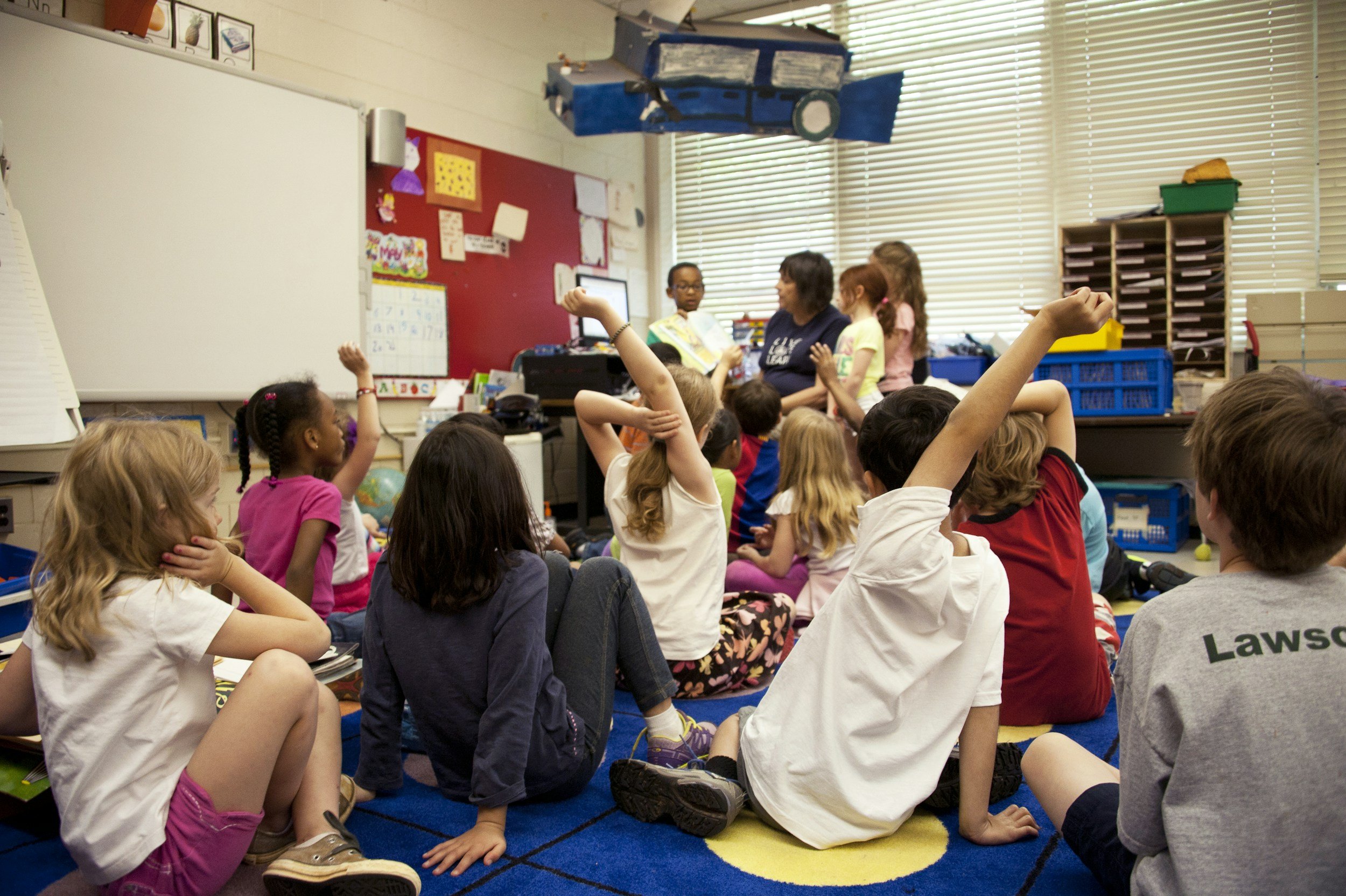
Your child's teacher says they had a great day.
They followed directions, completed their work, played with their friends, and made it through the school day without any major problems.
Then they come home.
Suddenly they're crying because their sibling touched something. They're whining about everything. They're starving. They're clingy. They're exhausted. You ask one simple question and get an attitude—or they have a complete meltdown over something that normally wouldn't bother them.
And you're left wondering: What happened between school and home?
The answer may be much simpler than you think.
Kids aren't just at school all day. They're doing school all day.
They're learning, listening, transitioning, socializing, following instructions, managing their emotions, navigating friendships, and meeting expectations for hours at a time. By the time they get home, some children simply don't have much left to give.
And sometimes, home is exactly where all of those emotions finally come out.
What Is Happening During the School Day?
Think about how quickly a typical school day moves.
Children arrive and almost immediately get started. They're completing assignments, listening to their teachers, transitioning between subjects, going to music, art, library, PE, or other specials, eating lunch, going to recess, and then heading right back into the classroom.
In many schools, recess may only be around 30 minutes. Lunch may be another 30 minutes. That doesn't leave a tremendous amount of time during the school day for children to simply move their bodies, relax, or have nothing expected of them.
For much of the day, they're being asked to sit down, follow instructions, complete their work, wait their turn, share classroom materials, keep their hands to themselves, transition when they're told, and regulate their behavior.
At the same time, life is still happening.
Maybe their friend didn't want to play with them at recess. Maybe they got an answer wrong in front of the class. Maybe their teacher corrected them. Maybe someone hurt their feelings. Maybe the classroom was particularly loud that day. Maybe they were frustrated with an assignment.
And they're doing all of this away from their parents or guardians.
If school begins around 7:00 or 8:00 in the morning, some children may have been awake and out of the house long before then. Depending on transportation, childcare, and a family's work schedule, they may not see their parent again until 4:00 or 5:00 that evening.
That's a long day.
As adults, many of us understand this feeling. You can have a perfectly fine day at work and still come home exhausted. Nothing terrible had to happen. You worked, talked to coworkers, solved problems, completed tasks, and were "on" for most of the day.
Sometimes when you get home, you just want to sit down and have nobody ask you for anything.
Children can feel that way too.
For Elementary School Children, It May Look Like...
For younger children, that exhaustion may come out as crying over seemingly small things, whining more than usual, becoming extremely clingy, arguing with siblings, being short with parents, or having a full tantrum or meltdown.
They may also simply be really hungry and really tired.
Elementary-aged children are still developing the emotional regulation skills we sometimes expect them to use all day long. At school, there are also very clear expectations for how they are supposed to behave.
And while children absolutely form meaningful relationships with their teachers, home is different. For many children, their parent or guardian is their primary attachment figure and home is the place where they feel safest.
So after spending the day holding themselves together, they may walk through the front door and finally release some of what they've been carrying.
That doesn't necessarily mean something terrible happened at school.
Sometimes it means they're simply done for the day.
Middle Schoolers Can Fall Apart Too—It May Just Look Different
We often give older children less grace because they're older.
But middle school is a huge developmental transition.
For some students, middle school means entering an entirely new building. They're making new friends, changing classrooms throughout the day, managing several teachers who all have different expectations, keeping track of more assignments, and being given significantly more responsibility.
Then add adolescence.
Their bodies are changing. Their social relationships are becoming increasingly important. Peer pressure can intensify. Friendships become more complicated. Academic expectations increase. They may be navigating social media and drama that doesn't necessarily end when the school bell rings.
That's a lot.
A middle schooler's version of falling apart may not look like an elementary-aged child's tantrum. Instead, they may come home and be short with you, go straight to their room, put their headphones on, say they don't want to talk, seem unusually irritable, or simply want to be alone.
That doesn't mean parents should completely disengage from their middle schoolers. But it may mean recognizing that they need some time to come down from their day too.
Give Them 30–60 Minutes to Just Be
One of the simplest changes families can make is creating a decompression period after school.
When your child first walks through the door, you don't necessarily need to immediately ask:
"How was school?"
"What did you learn today?"
"Do you have homework?"
"What happened with your friend?"
"Why didn't you eat your lunch?"
Give them a minute.
For the first 30–60 minutes, let the focus be rest.
Offer a snack. Let them play independently. Let them go outside. Maybe they want to cuddle with you. Maybe your middle schooler wants to go to their room and listen to music. Maybe your elementary-aged child wants to lie on the sofa and stare at the wall for twenty minutes.
That's okay.
This is a short period during their day where their body and nervous system can begin to relax and there isn't immediately another demand placed on them.
You can absolutely ask about school later. In fact, you should communicate with your children about what's happening in their lives.
It just doesn't have to happen the second they walk through the door.
Decompression Does NOT Mean No Boundaries
Giving children grace after school doesn't mean that all of your expectations suddenly disappear.
The backpack still goes where the backpack belongs.
The shoes still go where the shoes belong.
Your child is allowed to say, "I had a long day. I don't really want to talk right now."
They're human. There are probably days when you get off work and don't want to talk either. We can respect that.
But having a hard day doesn't mean they can scream at you, hit their sibling, throw their belongings around the house, or be disrespectful.
We can acknowledge how a child feels without allowing every behavior that comes from that feeling.
This is something I discuss more in Gentle Parenting Does NOT Mean No Boundaries. Warmth, empathy, and understanding can exist alongside expectations, routines, and limits.
After-school decompression is no different.
Then, Get Back Into the Routine
Routine, routine, routine.
Once your child has had time to decompress, move into your normal evening rhythm.
For elementary-aged children, I generally recommend getting homework started before dinner when possible. Younger children often have earlier bedtimes, and waiting until after dinner can mean trying to complete schoolwork with a child who is already exhausted.
That doesn't mean every family needs the exact same schedule.
Maybe your child comes home, has 30–60 minutes to decompress, works on homework, and then heads to dance or soccer. Maybe an activity happens first and homework needs to happen afterward.
Your routine has to work for your actual family.
As children move through elementary school, you can also gradually give them more responsibility. A kindergartener may need you right beside them checking the backpack and helping them understand their homework. As they move through first, second, third, fourth, and fifth grade, they can take on more.
But independence doesn't mean disappearing.
Check in. Make sure assignments are getting completed. Help them develop organizational habits. Gradually hand over responsibility instead of expecting them to suddenly know how to manage everything themselves.
That foundation becomes especially important in middle school.
Middle School: Independence With Support
Middle schoolers should begin taking more responsibility for their own schoolwork, but they still need parents.
You may not know about every single assignment anymore. They may not need you sitting beside them solving every homework problem. But you can still provide structure and support.
Maybe they're doing homework at the dining room table while you're making dinner nearby. Maybe you ask whether they need help. Maybe you check in about upcoming projects or encourage them to pack their bag before bed. Think of it as supporting them from a little farther away.
And if your middle schooler still needs more direct help? That's okay too.
Children develop at different rates. Independence should grow with the child.
The more you establish these habits during elementary school—putting belongings away, checking assignments, preparing for the next day, following an evening routine—the less foreign those responsibilities will feel when middle school arrives.
Don't Forget How Much Sleep They Still Need
Kids may seem like they have endless energy, but school-aged children still need a significant amount of sleep.
The American Academy of Sleep Medicine recommends that children ages 6–12 get 9–12 hours of sleep per 24 hours, while teenagers ages 13–18 should generally get 8–10 hours. Adequate sleep is associated with better attention, behavior, learning, memory, and emotional regulation.
That means bedtime should be based largely on what time your child has to wake up.
For example, if an elementary-aged child needs to wake up at 6:30 a.m., a 9:00 p.m. bedtime provides about 9½ hours of sleep. Some children will need even more than that, so their bedtime may need to be earlier.
A 13-year-old who needs to wake at 6:30 a.m. would need to be asleep by about 10:30 p.m. just to get eight hours—and many teens need more than the minimum.
Sports, band, cheer, dance, homework, dinner, showers, family time... there are only so many hours in an evening.
Sometimes bedtime will get pushed later. Life happens.
But when you're planning your child's schedule, remember that rest needs a place on the calendar too.
After-school activities can be incredibly valuable. Children can develop friendships, interests, skills, confidence, and a sense of belonging through extracurricular activities. But that doesn't necessarily mean every child needs an activity every day of the week.
Pay attention to the child in front of you.
When the Meltdown Is Already Happening
Sometimes you don't get the calm decompression period.
Your child gets in the car or walks through the door and the meltdown has already started.
This is usually not the moment for a lecture.
It's also probably not the best time to start asking:
"What happened?"
"Why are you acting like this?"
"Did something happen at school?"
"Why are you crying?"
When a child is highly emotionally activated, trying to reason, teach, or ask a long list of questions may not get you very far—and sometimes it can escalate the situation.
This is where I love concepts from Daniel J. Siegel and Tina Payne Bryson's The Whole-Brain Child and their related connect-and-redirect approach. Their guidance emphasizes connecting with the child's emotional experience first and waiting until the child is ready before moving into teaching and redirection.
In other words:
The lesson can wait.
Give them space to calm down. Help them regulate. Reduce how much you're saying. Be present.
Then talk.
Once your child is calm, that's when you can ask what happened, listen to what they're telling you, address any behavior that crossed a boundary, and talk about what they can do differently next time.
If they yelled at you, you can address the yelling.
If they hit their sibling, you can address the hitting.
If they threw their backpack across the room, you can address that too.
Waiting until they're regulated doesn't mean ignoring the behavior. It means choosing a time when your child is actually able to participate in the conversation.
When It Seems Like More Than After-School Exhaustion
There's also a difference between a child who needs some time to decompress after school and a child who seems deeply distressed every single day.
If your child is consistently coming home with major meltdowns, extreme exhaustion, frequent headaches or stomachaches, crying every evening, refusing to go to school, or showing a significant change in behavior, check in.
Start with your child—but choose your moment.
Don't try to investigate in the middle of a meltdown. Find a calm time when you can connect. Let them know you're there to listen, that they can talk to you, and that you'll advocate for them if they need you.
And check in with their teacher.
You don't lose anything by asking.
There may be an academic struggle, friendship issue, bullying concern, classroom difficulty, anxiety, or something else happening that isn't obvious from the outside.
Your child doesn't have to navigate that alone.
Give Them Somewhere to Land
As I'm writing this, I'm realizing just how much we ask children to do in a day.
Wake up early.
Get ready.
Get on the bus.
Go to school.
Actually do school.
Learn.
Listen.
Work.
Socialize.
Regulate.
Transition.
Come home.
Do homework.
Go to practice.
Eat dinner.
Take a bath.
Spend time with family.
Get ready for bed.
And then wake up and do it again.
That's a whole lot.
So when your child comes home and seems a little more emotional, clingy, quiet, irritable, or exhausted than the child their teacher saw all day, remember what they've just spent the last several hours doing.
Give them somewhere to land. Give them a snack. Give them some quiet. Give them a little time when nobody needs anything from them. Then return to the routines and boundaries that make home predictable and safe.
And when the behavior gets big, remember: you don't have to teach the lesson in the middle of the storm.
Connect. Let them regulate. Then talk.
Sometimes what children need most after spending an entire day meeting everyone else's expectations is simply a little time to come home and be.